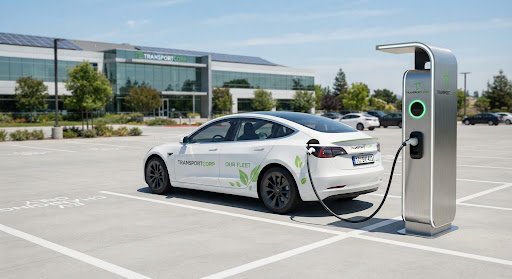
Enterprise EV adoption succeeds when it is treated as an operations program—not only a sustainability announcement. The right transition plan balances charging readiness, route energy demand, and employee punctuality SLAs.
Begin with route profiling. Map shift windows, trip distances, dwell time at campuses, and depot turnaround. Those data points determine which corridors are EV-ready today and which still need hybrid or CNG coverage during the transition.
Charging infrastructure should be planned in parallel with vehicle induction. Depot chargers, opportunity charging at campuses, and contingency protocols for grid downtime keep utilization high. Without that planning, EVs can create more schedule risk than emissions benefit.
Phased rollouts work best: pilot a defined employee group or campus, measure on-time performance and energy cost per trip, then expand. Pair each phase with driver familiarization and maintenance readiness so the new fleet stays audit-ready.
Finally, report what matters to stakeholders—CO₂ reduction, trip reliability, and cost per employee trip. When sustainability metrics sit beside operational KPIs, EV transition becomes a board-ready ETS improvement rather than a one-off pilot.